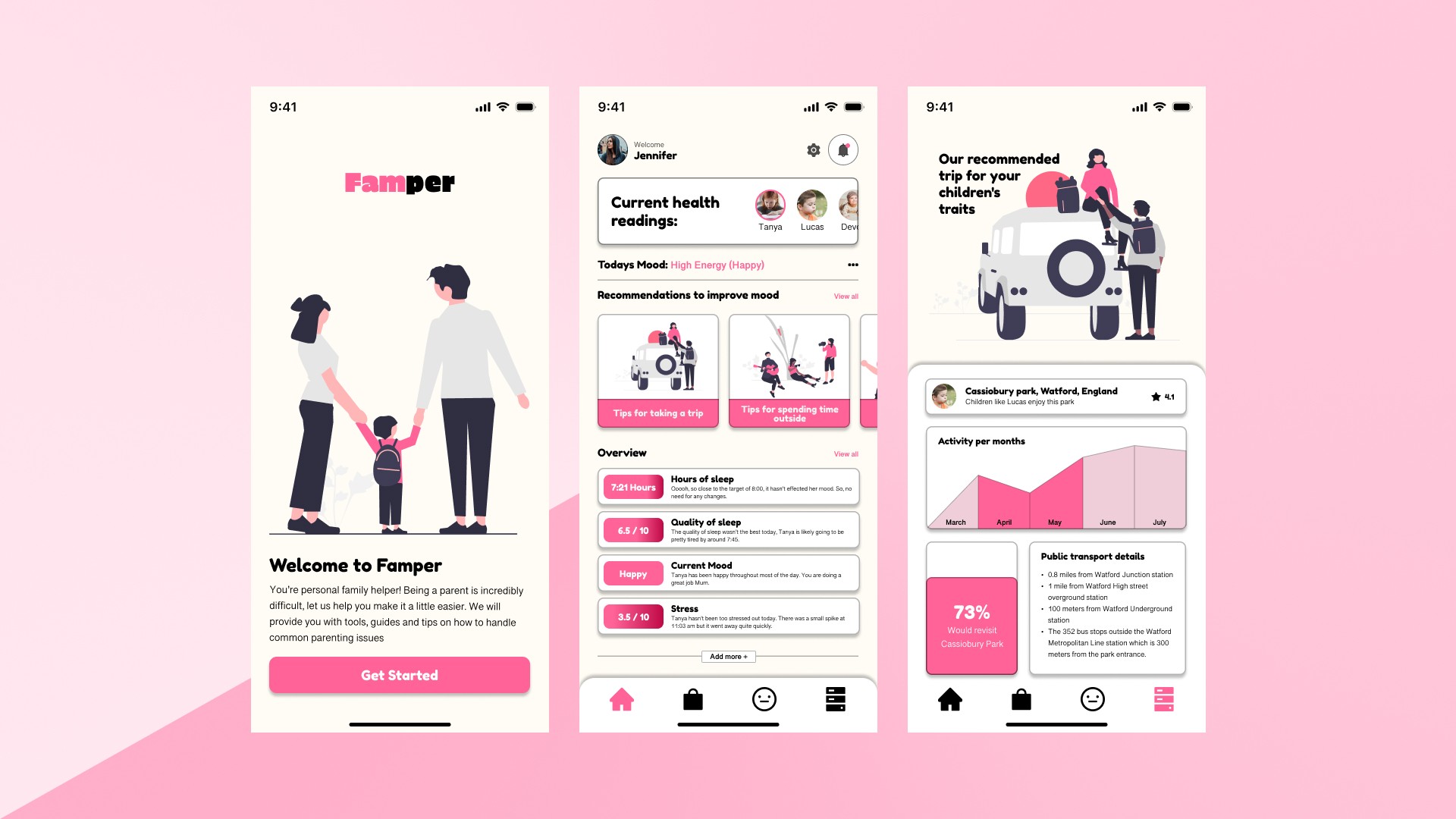
Innopo Operating System
A structured way to reuse, assemble, and evolve software systems so that every platform begins with a strong, consistent architecture.
00

Overview
Innopo is a product systems framework I developed through years of designing, evolving, and maintaining platforms in environments where change was constant and complexity accumulated quickly.
Across different organisations and projects, I repeatedly saw the same pattern:
The biggest constraint wasn’t talent, ideas, or ambition.
It was the structure of the systems themselves.
Strong teams were slowed down by:
tightly coupled platforms that were risky to change
legacy decisions that couldn’t be reversed
over-engineered processes that added friction
products that scaled in usage but not in clarity
Innopo emerged as a way to design product systems that can evolve without collapsing under their own complexity.
It is not a product or a business.
It is the framework I use to own product direction, make trade-offs, and design systems that scale over time.
The Core Product Problem
Most organisations don’t fail because they lack innovation. They fail because complexity compounds faster than clarity.
Over time, products and processes become:
tightly coupled
hard to reason about
risky to change
expensive to maintain
As complexity grows, teams slow down. Decision-making becomes cautious. Innovation becomes incremental or avoided entirely.
Innopo addresses this by focusing on how systems are structured, not just what they do.
The Innopo Principles
Innopo is built on three principles that guide how I approach product strategy, platform design, and prioritisation decisions.
Modular by Default
Product systems should be designed as independent, clearly bounded components.
When systems are modular:
change becomes safer
upgrades are predictable
failures are isolated
teams can work in parallel
scope creep is easier to control
This principle directly informs how I:
decompose platforms into modules
define ownership boundaries
evaluate build vs replace decisions
reduce long-term technical risk
Modularity is not just an architectural choice. It is a strategic product decision that preserves optionality over time.
Minimal, Not Simplistic
Minimal design is not about doing less work. It is about removing everything that doesn’t meaningfully contribute to the outcome.
The most resilient systems I’ve worked on shared the same characteristics:
low cognitive load
clear mental models
minimal dependencies
few irreversible decisions
Minimal systems:
are easier for teams to understand
onboard faster
scale more predictably
reduce long-term maintenance burden
This principle shapes how I:
prioritise features
reduce scope
challenge unnecessary complexity
balance short-term delivery with long-term sustainability
Designed for Change
Change is inevitable. Systems that assume stability eventually fail.
Innopo treats change as a first-class design constraint.
This means:
favouring reversible decisions
designing foundations that still make sense years later
avoiding over-optimisation for short-term needs
planning for evolution rather than rewrites
In practice, this leads to:
longer product lifespans
lower rewrite risk
better investment decisions
calmer, more confident product teams
How Innopo Informs Product Leadership
Innopo is not theoretical. I apply it directly when owning product direction and guiding teams through complex decisions.
I use the framework to:
prioritise initiatives based on long-term system health
evaluate trade-offs between speed, scope, and scalability
decide when to extend existing systems versus replace them
reduce unnecessary feature and process complexity
align stakeholders around clear product principles
design platforms that enable teams to move faster over time
This approach helps create sustainable product velocity, not just short-term output.
Impact on Product Outcomes
Applying Innopo consistently leads to:
improved decision quality
clearer roadmaps
reduced maintenance risk
lower cognitive load for teams
more predictable system evolution
better alignment between product, design, and engineering
Rather than treating complexity as inevitable, the framework provides a way to manage and reduce it deliberately.
Why This Matters at Head of Product Level
At a senior product leadership level, success is not defined by shipping features.
It is defined by:
creating clarity in ambiguity
designing systems that outlast individual initiatives
enabling teams to scale without slowing down
balancing immediate delivery with long-term health
making decisions that compound positively over time
Innopo gives me a consistent mental model for doing exactly that.
Where Innopo Is Today
Innopo is a living framework that continues to evolve.
It is refined through:
real-world product work
exposure to different organisational constraints
successes, failures, and trade-offs made under pressure
Everything within the framework has been:
applied in practice
tested in complex environments
iterated based on outcomes
This is not abstract theory. It is practice distilled into principles.
01
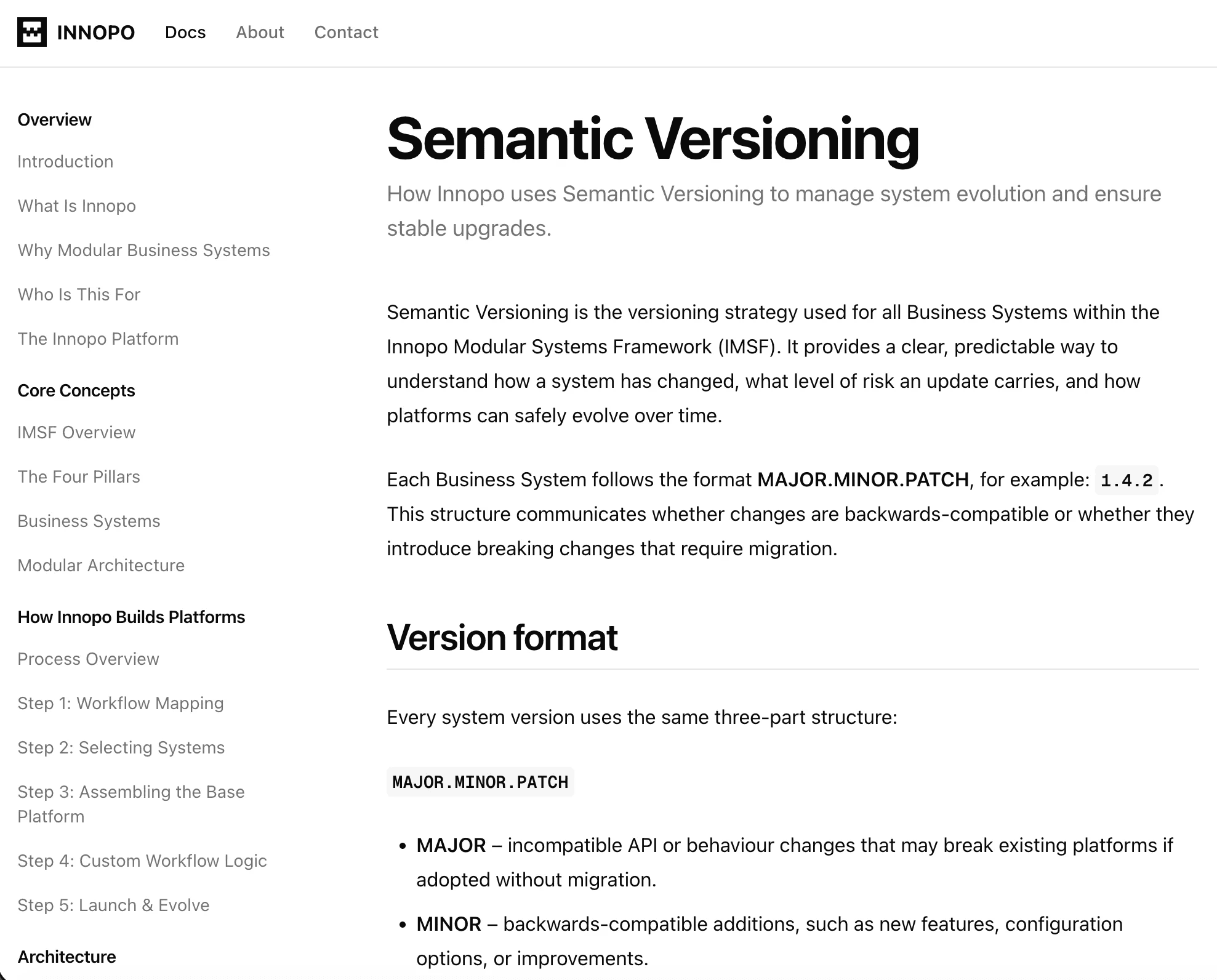
Each Business System follows the format MAJOR.MINOR.PATCH, for example: 1.4.2. This structure communicates whether changes are backwards-compatible or whether they introduce breaking changes that require migration.
02
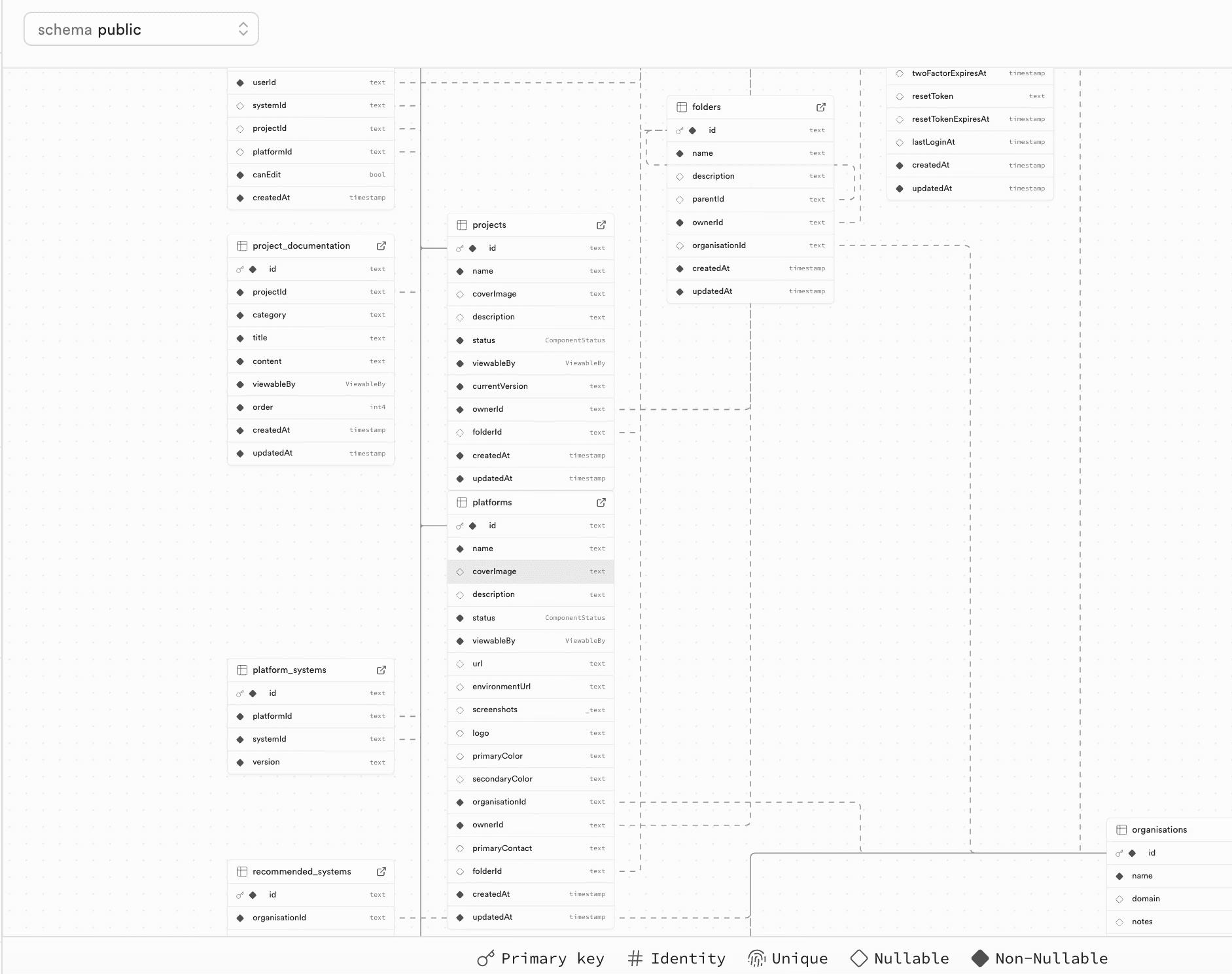
Innopo Partners are onboarded on to our private system's library. This image is a visualiser of the Innopo database schema to help understand table relationships and data flow
see also